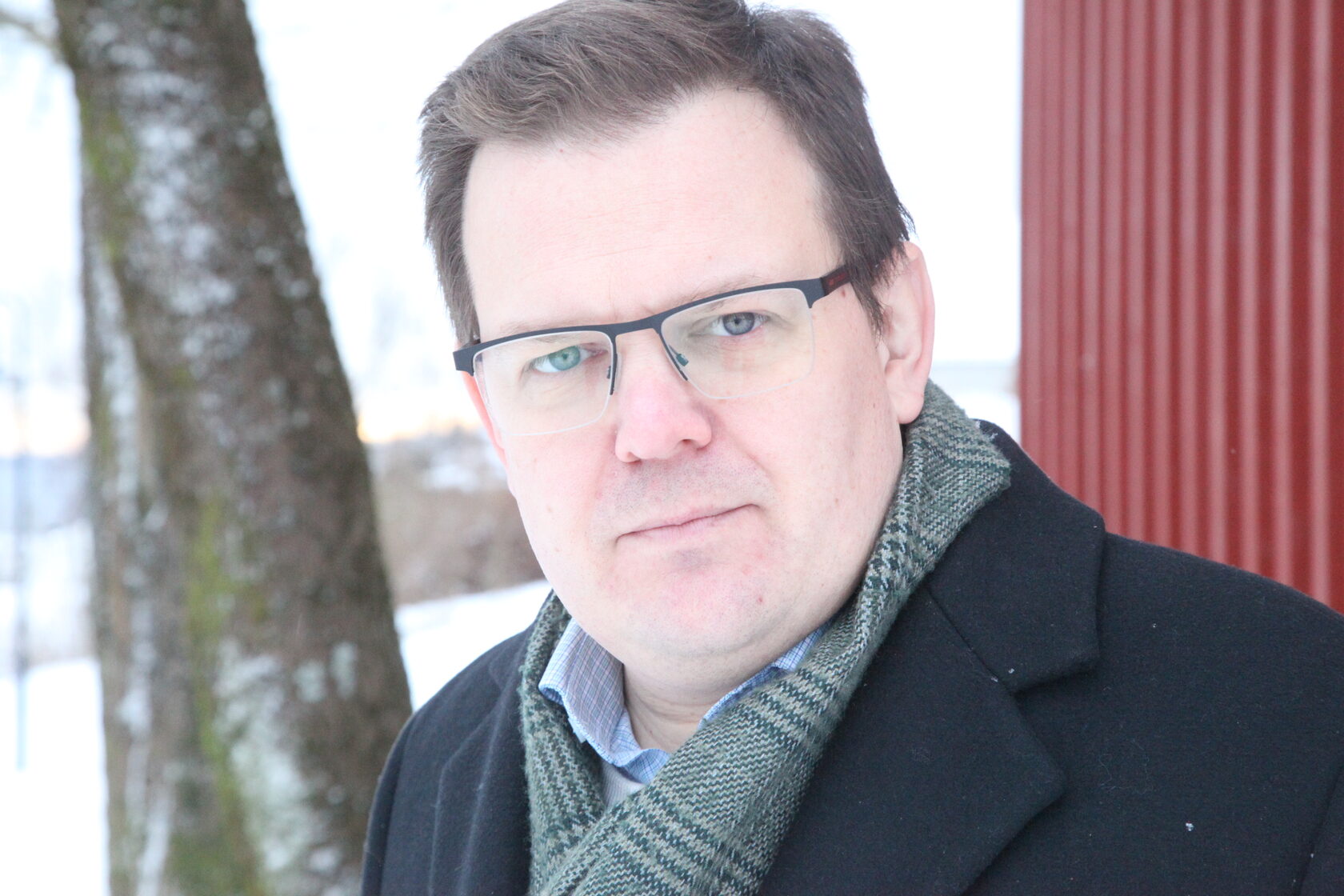
On my way to an interview with Professor Glenn Diesen, past his Campus Bakketeigen, University of South-Eastern Norway, at idyllic Åsgårdstrand, it strikes me that Diesen, for an academia that wants researchers to "reach out" to the rest of us, must be academia's favourite.
When I contacted two of the world's top names in "International Relations", Columbia University's Jeffrey Sachs and Chicago University's John Mearsheimer, to get their impressions of the Norwegian professor, it became clear that they would have liked to have him as a colleague in their respective departments in New York and Chicago. Nothing less. Diesen has nevertheless ended up here in Åsgårdstrand of all places.
But first of all, a disclaimer. As leader of Partiet-FOR's Akerhus county party, I had hoped that Diesen would run in the parliamentary election for us. But he quickly found out that being a politician was not what he wanted to be. Now I meet him instead as a journalist for an interview about his field: Describing the European and Eurasian scene today.
From Åsgårdstrand, Glenn Diesen balances nicely between serving his podcasts with an international network of experts and subscribers, with teaching, family life and research. In addition, he is a sought-after speaker and debater and has been invited to India, China, Russia, Germany, Iran, the Pope in Rome and the Pentagon in the United States, to name the latest stops. The man must be suspicious, right?
When I contacted two of the world's top names in "International Relations", Columbia University's Jeffrey Sachs and Chicago University's John Mearsheimer, to get their impressions of the Norwegian professor, it became clear that they would have liked to have him as a colleague in their respective departments in New York and Chicago. Nothing less. Diesen has nevertheless ended up here in Åsgårdstrand of all places.
But first of all, a disclaimer. As leader of Partiet-FOR's Akerhus county party, I had hoped that Diesen would run in the parliamentary election for us. But he quickly found out that being a politician was not what he wanted to be. Now I meet him instead as a journalist for an interview about his field: Describing the European and Eurasian scene today.
From Åsgårdstrand, Glenn Diesen balances nicely between serving his podcasts with an international network of experts and subscribers, with teaching, family life and research. In addition, he is a sought-after speaker and debater and has been invited to India, China, Russia, Germany, Iran, the Pope in Rome and the Pentagon in the United States, to name the latest stops. The man must be suspicious, right?
How do you experience it yourself?
"I can't write the books I had planned," he sighs. "He thinks there is too little done", as Prøysen says about the farmer in Åsmarken, for those who know his ‘You will have a day in the morning’. Today, and with us, he is generous with his time.
From the basement studio and office, steps on the floor above can be heard, from the family – sounds of small birds in cages and a heartthrob of a 10-week-old Labrador retriever.
I think that if there is an iota of residual curiosity among Norwegian students on international issues, Professor Glenn Diesen at the University of South-Eastern Norway must be like flypaper – or rather, student paper.
But someone who doubts what "everyone" believes to be true - the media's consensus narratives - must be unreliable, said ethics professor Haugen in Aftenposten on 18 June 2025, and not worthy of being a professor. Without his own professional knowledge, Haugen was rude enough to judge Diesen's statements as untrue. Has consensus become "truth" and become a virtue in the prevailing Norwegian academia? However, the military academy Amund Osflaten quickly puts him in his place: "If academia does not challenge consensus, who will?" (Aftenposten 10 June 2025). Suddenly, more people probably realized how the mob – the academic – had driven itself into the absurd. The Military Academy silenced the weapons.
"Do you side with Russia, Glenn?" was the question I couldn't bring myself to ask. It would have been excessively plump, as all the time I knew that Diesen was one of those who, early on, condemned the invasion in 2022 as a violation of international law. But like John Mearsheimer, he also pointed out that NATO's long-term provocations were also a blatant violation of international law. The blame for the invasion lies with NATO, the Chicago professor believes. Instead, I get straight to the point after the previous night's events, where Russia had used a feared weapon, an Oreshnik missile:
"I can't write the books I had planned," he sighs. "He thinks there is too little done", as Prøysen says about the farmer in Åsmarken, for those who know his ‘You will have a day in the morning’. Today, and with us, he is generous with his time.
From the basement studio and office, steps on the floor above can be heard, from the family – sounds of small birds in cages and a heartthrob of a 10-week-old Labrador retriever.
I think that if there is an iota of residual curiosity among Norwegian students on international issues, Professor Glenn Diesen at the University of South-Eastern Norway must be like flypaper – or rather, student paper.
But someone who doubts what "everyone" believes to be true - the media's consensus narratives - must be unreliable, said ethics professor Haugen in Aftenposten on 18 June 2025, and not worthy of being a professor. Without his own professional knowledge, Haugen was rude enough to judge Diesen's statements as untrue. Has consensus become "truth" and become a virtue in the prevailing Norwegian academia? However, the military academy Amund Osflaten quickly puts him in his place: "If academia does not challenge consensus, who will?" (Aftenposten 10 June 2025). Suddenly, more people probably realized how the mob – the academic – had driven itself into the absurd. The Military Academy silenced the weapons.
"Do you side with Russia, Glenn?" was the question I couldn't bring myself to ask. It would have been excessively plump, as all the time I knew that Diesen was one of those who, early on, condemned the invasion in 2022 as a violation of international law. But like John Mearsheimer, he also pointed out that NATO's long-term provocations were also a blatant violation of international law. The blame for the invasion lies with NATO, the Chicago professor believes. Instead, I get straight to the point after the previous night's events, where Russia had used a feared weapon, an Oreshnik missile:
What is Oreshnik?
"It's a hypersonic missile that goes well over 10 times the speed of sound, [i.e. 3-4 kilometres per second,] before you see it, it's hit you. Even without an explosive head, the kinetic energy of the impact is so strong that it is catastrophically destructive. In addition, it chooses trajectories that are unpredictable and impossible to predict even for advanced radars," he says.
After Oreshnik's introduction, the giant aircraft carrier Gerald Ford must seem like a tragic trap of a "decoy duck" with its 5,000 crew and almost a hundred aircraft, defenceless in the face of the fateful missile, I think.
"But the Oreshnik missile is not actually about Ukraine. The use is aimed at NATO," says Diesen. "Look, we can do this, says Russia. It cuts through all missile defences, and the West has nothing to put up against it." I remember former Chief of Defence Sverre Diesen (no kinship!) who said on TV2 on April 2, 2023: 'The Russians are not very skilled. They don't get anything done. They have two characteristics that make them dangerous. They are many, and they are brutal." Oreshnik talks about Russian expertise. Sverre Diesen is currently head of the Norwegian Defence Research Establishment.
"It's a hypersonic missile that goes well over 10 times the speed of sound, [i.e. 3-4 kilometres per second,] before you see it, it's hit you. Even without an explosive head, the kinetic energy of the impact is so strong that it is catastrophically destructive. In addition, it chooses trajectories that are unpredictable and impossible to predict even for advanced radars," he says.
After Oreshnik's introduction, the giant aircraft carrier Gerald Ford must seem like a tragic trap of a "decoy duck" with its 5,000 crew and almost a hundred aircraft, defenceless in the face of the fateful missile, I think.
"But the Oreshnik missile is not actually about Ukraine. The use is aimed at NATO," says Diesen. "Look, we can do this, says Russia. It cuts through all missile defences, and the West has nothing to put up against it." I remember former Chief of Defence Sverre Diesen (no kinship!) who said on TV2 on April 2, 2023: 'The Russians are not very skilled. They don't get anything done. They have two characteristics that make them dangerous. They are many, and they are brutal." Oreshnik talks about Russian expertise. Sverre Diesen is currently head of the Norwegian Defence Research Establishment.
We have to get into the subject of Ukraine. It has been well proven that Putin delayed entering the Donbas for the longest time in February 2022. What do you think about that?
"Norwegians believe that it was the Russians who started the war. And why shouldn't they believe it? All the politicians say so. Western militaries say so. The media says so. But it is no secret that the NATO countries supported a coup on Maidan Square as early as 2014. And I agree with NATO's Stoltenberg that the war started then, in 2014. The day after the coup d'état, in which the democratically elected President Yanukovych was forced to flee, the New York Times reported that the Americans immediately installed a new intelligence chief [Valentyn Nalyvaichenko of the SBU] who cooperated with the CIA and MI6 from day one. Their goal was to use Ukraine as a front line against Russia."
After the Maidan, the West's propaganda apparatus began to paint its narrative in earnest: The Russians want to get Crimea back. Putin wants to recreate the Soviet Union and old Russian greatness. Yes, the whole of Ukraine must be conquered. Putin is the emperor, the tsar. And has he not said that the dissolution of the Soviet Union was a disaster?
"Norwegians believe that it was the Russians who started the war. And why shouldn't they believe it? All the politicians say so. Western militaries say so. The media says so. But it is no secret that the NATO countries supported a coup on Maidan Square as early as 2014. And I agree with NATO's Stoltenberg that the war started then, in 2014. The day after the coup d'état, in which the democratically elected President Yanukovych was forced to flee, the New York Times reported that the Americans immediately installed a new intelligence chief [Valentyn Nalyvaichenko of the SBU] who cooperated with the CIA and MI6 from day one. Their goal was to use Ukraine as a front line against Russia."
After the Maidan, the West's propaganda apparatus began to paint its narrative in earnest: The Russians want to get Crimea back. Putin wants to recreate the Soviet Union and old Russian greatness. Yes, the whole of Ukraine must be conquered. Putin is the emperor, the tsar. And has he not said that the dissolution of the Soviet Union was a disaster?
Is the Ukraine war a civil war, as the Swiss NATO and Warsaw Pact expert Jacques Baud claims? That Ukraine is two peoples divided between East and West. Landed on the border?
"Yes, that's a good point. NATO wants to make Ukraine a frontline against Russia. [The Pentagon's 2019 Fringe Report laid out the roadmap: 'How to destabilise Russia.'] But a large majority of the population did not want to join NATO, opinion polls showed. [Kiev] therefore had to criminalise anyone who held such 'pro-Russian' attitudes."
You get a lot by following Glenn Diesen night after night on YouTube in preparation for an interview. His academic career is topped off with an impressive bibliography. The dialogue in his podcasts does not disappoint. They are dynamic and engaging. His own views are also secondary in areas where he himself is an expert. Diesen gives today's stories a necessary, historical framework that Norwegian media today deftly avoid. Relevant today is the former US president's national security adviser, Zbigniew Brzezinski's book The Grand Chessboard from 1997. It cultivates the idea that Russia must be broken before the United States can gain control of the world, because, as we know, you are not safe until you have control over it all. Forgotten is Kennedy's speech on June 10, 1963, about trying to see the world from the side of Soviet Russia. Surely billions are spent annually on 850 military bases spread over about 80 countries for a reason?
Diesen draws on broad knowledge and assessments from the world's most skilled; we have already mentioned Sachs and Mearsheimer. But also from adviser Ray McGovern, a former Russia expert to US presidents, such as Kennedy in 1963, to Scott Ritter, the man who exposed Secretary of State Powell's lies about the Iraqi weapons of mass destruction that did not exist. In books and speeches, Glenn has an impressive precision. No one has caught him in falsehoods.
Many followed the Debate with Fredrik Solvang in NRK on 20 May 2025. The professor does not raise his voice, does not ridicule, explains calmly, and is confident. He does not chase easy points, but begins the explanation of NATO's provocations. Once again, he is based on facts. With the certainty of his own competence, Diesen will be difficult to deal with for the participants in the Debate, for the Conservative Party's Sørheim, the Armed Forces' retired researcher Holtsmark and the NHC's Borchgrevink. They react inappropriately and vulgarly. We who listened immediately understood who we could trust.
"Yes, that's a good point. NATO wants to make Ukraine a frontline against Russia. [The Pentagon's 2019 Fringe Report laid out the roadmap: 'How to destabilise Russia.'] But a large majority of the population did not want to join NATO, opinion polls showed. [Kiev] therefore had to criminalise anyone who held such 'pro-Russian' attitudes."
You get a lot by following Glenn Diesen night after night on YouTube in preparation for an interview. His academic career is topped off with an impressive bibliography. The dialogue in his podcasts does not disappoint. They are dynamic and engaging. His own views are also secondary in areas where he himself is an expert. Diesen gives today's stories a necessary, historical framework that Norwegian media today deftly avoid. Relevant today is the former US president's national security adviser, Zbigniew Brzezinski's book The Grand Chessboard from 1997. It cultivates the idea that Russia must be broken before the United States can gain control of the world, because, as we know, you are not safe until you have control over it all. Forgotten is Kennedy's speech on June 10, 1963, about trying to see the world from the side of Soviet Russia. Surely billions are spent annually on 850 military bases spread over about 80 countries for a reason?
Diesen draws on broad knowledge and assessments from the world's most skilled; we have already mentioned Sachs and Mearsheimer. But also from adviser Ray McGovern, a former Russia expert to US presidents, such as Kennedy in 1963, to Scott Ritter, the man who exposed Secretary of State Powell's lies about the Iraqi weapons of mass destruction that did not exist. In books and speeches, Glenn has an impressive precision. No one has caught him in falsehoods.
Many followed the Debate with Fredrik Solvang in NRK on 20 May 2025. The professor does not raise his voice, does not ridicule, explains calmly, and is confident. He does not chase easy points, but begins the explanation of NATO's provocations. Once again, he is based on facts. With the certainty of his own competence, Diesen will be difficult to deal with for the participants in the Debate, for the Conservative Party's Sørheim, the Armed Forces' retired researcher Holtsmark and the NHC's Borchgrevink. They react inappropriately and vulgarly. We who listened immediately understood who we could trust.
You can't write the books you had in mind?
Time is short. Diesen does not hide the fact that his wife's efforts, as secretary in the family business, make it possible to serve the network and plan and organise appointments and time. And carries the burden during the journeys he takes. But he also does not hide the fact that public life puts pressure on the family that he is worried about.
"But the children can actually walk to school alone," he smiles. "It's unique in a world context." He feels gratitude for the good Norwegian growing conditions for children. He grew up in Holmlia, and his mother still lives there.
Is that enough for you to stay here for a few more years, we want to know. The children speak Norwegian. But after years of working and studying in Australia, the family has dual citizenship and could well thrive there. He has a background from the Netherlands and Russia as well. Speaks the languages, if not fluently, and knows the cultures and academic environments of both.
Time is short. Diesen does not hide the fact that his wife's efforts, as secretary in the family business, make it possible to serve the network and plan and organise appointments and time. And carries the burden during the journeys he takes. But he also does not hide the fact that public life puts pressure on the family that he is worried about.
"But the children can actually walk to school alone," he smiles. "It's unique in a world context." He feels gratitude for the good Norwegian growing conditions for children. He grew up in Holmlia, and his mother still lives there.
Is that enough for you to stay here for a few more years, we want to know. The children speak Norwegian. But after years of working and studying in Australia, the family has dual citizenship and could well thrive there. He has a background from the Netherlands and Russia as well. Speaks the languages, if not fluently, and knows the cultures and academic environments of both.
Did Trump represent, with Venezuela and the Greenland adventures, something qualitatively new in American foreign policy? Or is he just a vulgar expression of an underlying deep state that rules the United States regardless of who is ruling on the surface?
"Norway has given Trump what he wanted in recent months. They gave him Machado with the Peace Prize. And peace is created in 'democracies' that the US can shape militarily, it is believed. So war is peace. This has also been our logic for thirty years, so why not now too?"
"Trump is the president of low-hanging fruit." He can imagine going into Colombia, Yemen, and Mexico… he is not against war, but against "eternal" wars that trap the United States for years and are costly and troublesome. Quick in. Declaring victory and then withdrawing and moving on to new adventures. That is Trump's method."
"The United States also rules the world economically by weaponising the dollar. He steals Russia's money, paralyses Iran's economy by blocking the use of the international money transfer technology SWIFT/IBAN, or denies countries access to its banks. In this way, countries are being ground up without direct invasion, but with invading destruction, medicine shortages, hunger and poverty before attempting a regime change in the USA's favour. The world realises that we cannot continue on the path we are on now. In the next crisis, the bubble could easily backfire on the United States. The world does not want to continue to depend on the United States."
"Norway has given Trump what he wanted in recent months. They gave him Machado with the Peace Prize. And peace is created in 'democracies' that the US can shape militarily, it is believed. So war is peace. This has also been our logic for thirty years, so why not now too?"
"Trump is the president of low-hanging fruit." He can imagine going into Colombia, Yemen, and Mexico… he is not against war, but against "eternal" wars that trap the United States for years and are costly and troublesome. Quick in. Declaring victory and then withdrawing and moving on to new adventures. That is Trump's method."
"The United States also rules the world economically by weaponising the dollar. He steals Russia's money, paralyses Iran's economy by blocking the use of the international money transfer technology SWIFT/IBAN, or denies countries access to its banks. In this way, countries are being ground up without direct invasion, but with invading destruction, medicine shortages, hunger and poverty before attempting a regime change in the USA's favour. The world realises that we cannot continue on the path we are on now. In the next crisis, the bubble could easily backfire on the United States. The world does not want to continue to depend on the United States."
When will the economic hegemony of the United States end?
"The world has realised that the US has weaponised the dollar and wants to move away from storing its reserves in dollars [as it also sees the EU using its banks against Russia]. It is over when the world properly switches to other forms of exchange [gold, exchange, yuan, rupee, rubles, commodities]. The countries want to get away from this and are preparing for it these days."
What about Venezuela? Is Chinese investment here one of the reasons for the kidnapping of Maduro?
"The United States demands a halt to Venezuela's trade with China and Russia. China's 'Belt and Road' must be stopped. But they also want to stop Latin America's trade with others. They do not fear that Russia and China will deploy military troops or missiles. But it is threatening for the United States that Canada will also diversify foreign operations with countries such as China, India and Latin America and thus become less dependent on the United States.
Great power rivalry between the United States, Russia and China (we can ignore the EU, which is not a great power) is the topic of a conversation I will have later today between the American professors Jeffrey Sachs and John Mearsheimer. The reason for conflict is international anarchy. We have a power vacuum. If you want security, you have to compete for it. Allies are sought to contain the strongest rivals. Just as the United States and Russia came together against Germany during the war. When Germany was crushed, there was a break and new competition between the two "greats".
"The world has realised that the US has weaponised the dollar and wants to move away from storing its reserves in dollars [as it also sees the EU using its banks against Russia]. It is over when the world properly switches to other forms of exchange [gold, exchange, yuan, rupee, rubles, commodities]. The countries want to get away from this and are preparing for it these days."
What about Venezuela? Is Chinese investment here one of the reasons for the kidnapping of Maduro?
"The United States demands a halt to Venezuela's trade with China and Russia. China's 'Belt and Road' must be stopped. But they also want to stop Latin America's trade with others. They do not fear that Russia and China will deploy military troops or missiles. But it is threatening for the United States that Canada will also diversify foreign operations with countries such as China, India and Latin America and thus become less dependent on the United States.
Great power rivalry between the United States, Russia and China (we can ignore the EU, which is not a great power) is the topic of a conversation I will have later today between the American professors Jeffrey Sachs and John Mearsheimer. The reason for conflict is international anarchy. We have a power vacuum. If you want security, you have to compete for it. Allies are sought to contain the strongest rivals. Just as the United States and Russia came together against Germany during the war. When Germany was crushed, there was a break and new competition between the two "greats".
When it comes to explaining the great power rivalry: Can one say that Jeffrey Sachs represents those who seek peace through cooperation and balance between countries, while John Mearsheimer represents the 'realists' who believe great powers seek peace through domination and control - to always have to be the strongest? And won't this lead to a devastating armament spiral?
"Today, the BRICS countries are rallying as a counterweight to the United States. They seek a new balance. The West's security concern towards Russia is not honest. Russia is no threat to the West. The destruction of the gas pipeline shattered cooperation between Russia and Germany, but has also crushed German industry and made the country dependent on expensive US energy. With the US's focus on Russia, China has been given the freedom to grow stronger, and strengthened cooperation between them. That was probably not the plan.
The United States, on the other hand, is burdened by the wars it is waging. China is big, but has no imperial tradition of threatening others, Sachs believes. Mearsheimer, for his part, believes that China can become a bully just as the United States' unipolarity degenerated. But China has never had the kind of expansive desires that the United States has had, so it may well be doubtful."
"Today, the BRICS countries are rallying as a counterweight to the United States. They seek a new balance. The West's security concern towards Russia is not honest. Russia is no threat to the West. The destruction of the gas pipeline shattered cooperation between Russia and Germany, but has also crushed German industry and made the country dependent on expensive US energy. With the US's focus on Russia, China has been given the freedom to grow stronger, and strengthened cooperation between them. That was probably not the plan.
The United States, on the other hand, is burdened by the wars it is waging. China is big, but has no imperial tradition of threatening others, Sachs believes. Mearsheimer, for his part, believes that China can become a bully just as the United States' unipolarity degenerated. But China has never had the kind of expansive desires that the United States has had, so it may well be doubtful."
Where does the current war in Ukraine end?
"We are heading for a major conflict. Russia demands NATO out of Ukraine, no soldiers, intelligence, weapons deployment or the like. This does not automatically bring 'peace'. But Europe wanted the Americans to stay in Europe. The price of having the Americans in Europe was expansion eastwards and a break with Russia. Now, however, the Americans are moving away from Europe and are aiming for confrontation with China.
And Norway?
"During the Cold War, Norway had a policy of détente. Today, it is treason to promote this. Send weapons. Not diplomats. It is not long ago that Prime Minister Støre assured that it would not be appropriate to send weapons to Ukraine. Today, it is almost treason to say such a thing."
"We are heading for a major conflict. Russia demands NATO out of Ukraine, no soldiers, intelligence, weapons deployment or the like. This does not automatically bring 'peace'. But Europe wanted the Americans to stay in Europe. The price of having the Americans in Europe was expansion eastwards and a break with Russia. Now, however, the Americans are moving away from Europe and are aiming for confrontation with China.
And Norway?
"During the Cold War, Norway had a policy of détente. Today, it is treason to promote this. Send weapons. Not diplomats. It is not long ago that Prime Minister Støre assured that it would not be appropriate to send weapons to Ukraine. Today, it is almost treason to say such a thing."
Norway has consensus, but still freedom of speech?
"Norway today is moving towards a closed society. The media creates and demands consensus. Walter Lippmann said, "When everyone thinks the same thing, no one thinks." But where does it come from? This is not Norwegian tradition, is it? Why aren't people and the media more curious? Why, for example, do we never hear from top people like the former German army chief, Harald Kujat or CIA director George Beebe, who precisely against the current warns against confrontation with Russia. Yes, Beebe wrote a whole book about nuclear war being not unlikely. You have to go to my podcast to find out what they warn against."
A day with Glenn Diesen may have turned into a conversation more than an interview, with an almost infinite number of topics. But Ny Tid takes a sigh of relief in the end:
"How did Norway form its 'consensus' on the war in Ukraine? Was it after debate and research and conversation among experts?" asks Diesen, and answers: "No, we got 'consensus' delivered from above from one source, from the military!"
The method was historic and simple: The old approach of "we good" and "the bad guys" worked once again. "We have built up a hatred of 'the others," says Glenn Diesen. Not against the Indians, the Japanese or the Germans this time, but against the 'Russians'. Not against Hitler, but against Putin. And the weaker the basis for claims and analyses, the more important it became to discredit the opposing voices, ugly and unreasonable, as Asle Toje described Eriksen Søreides in NRK's Debatten. "Who is going to challenge consensus?" challenged the Military Academy's Osflaten. Unfortunately, almost the entire Norwegian media landscape ended up on the wrong side, and academia remained shamefully silent. But only almost. Glenn Diesen is not gagged – and for the time being, he lives in Norway.
"Norway today is moving towards a closed society. The media creates and demands consensus. Walter Lippmann said, "When everyone thinks the same thing, no one thinks." But where does it come from? This is not Norwegian tradition, is it? Why aren't people and the media more curious? Why, for example, do we never hear from top people like the former German army chief, Harald Kujat or CIA director George Beebe, who precisely against the current warns against confrontation with Russia. Yes, Beebe wrote a whole book about nuclear war being not unlikely. You have to go to my podcast to find out what they warn against."
A day with Glenn Diesen may have turned into a conversation more than an interview, with an almost infinite number of topics. But Ny Tid takes a sigh of relief in the end:
"How did Norway form its 'consensus' on the war in Ukraine? Was it after debate and research and conversation among experts?" asks Diesen, and answers: "No, we got 'consensus' delivered from above from one source, from the military!"
The method was historic and simple: The old approach of "we good" and "the bad guys" worked once again. "We have built up a hatred of 'the others," says Glenn Diesen. Not against the Indians, the Japanese or the Germans this time, but against the 'Russians'. Not against Hitler, but against Putin. And the weaker the basis for claims and analyses, the more important it became to discredit the opposing voices, ugly and unreasonable, as Asle Toje described Eriksen Søreides in NRK's Debatten. "Who is going to challenge consensus?" challenged the Military Academy's Osflaten. Unfortunately, almost the entire Norwegian media landscape ended up on the wrong side, and academia remained shamefully silent. But only almost. Glenn Diesen is not gagged – and for the time being, he lives in Norway.
